Offer Net Banking payments
Overview
Net Banking is a local Indian bank-payment method supported through a local payment service provider. Customers can use it for one-time payments or authorize an eNACH mandate for subscription payments.
To add Net Banking to your checkout, contact Client Experience.
This page explains Net Banking from the client's perspective. You can share the Pay with Net Banking guide, which contains the full checkout flow and screenshots, with customers who need help completing a payment.
Net Banking at a glance
Why offer Net Banking?
Net Banking gives eligible customers in India a direct online-banking option and supports subscription renewals through eNACH mandates. It can serve customers who prefer bank authorization over cards or wallets while preserving a manual renewal path when no mandate exists.
One-time payments
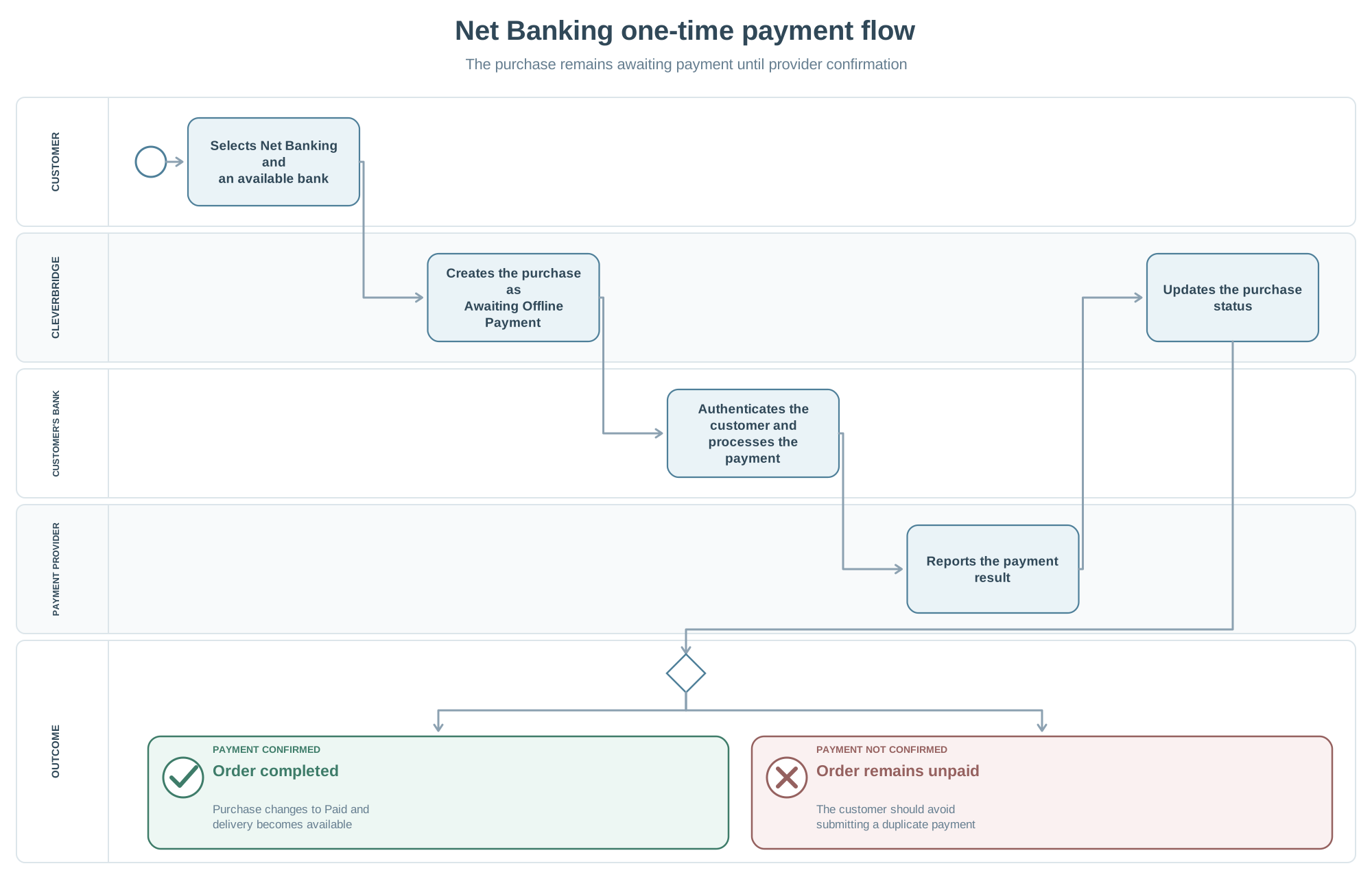
The customer selects Net Banking and a supported bank, confirms the order, and approves the payment in the bank portal. Cleverbridge creates the purchase as Awaiting Offline Payment and changes it to Paid after payment confirmation.
In some cases, the confirmation page does not refresh automatically. The customer should refresh the page before attempting another payment to avoid a duplicate debit.
Subscriptions and eNACH mandates
For a subscription, the customer supplies the bank, account number, account holder's name, and account type (Current or Savings). The customer is redirected through the National Payments Corporation of India (NPCI) interface to the bank, where the mandate and payment are authorized.
After acceptance, NPCI displays the Unique Mandate Reference Number (UMRN). The purchase remains Awaiting Offline Payment until payment reporting and settlement complete; the customer should not submit another payment during this period.
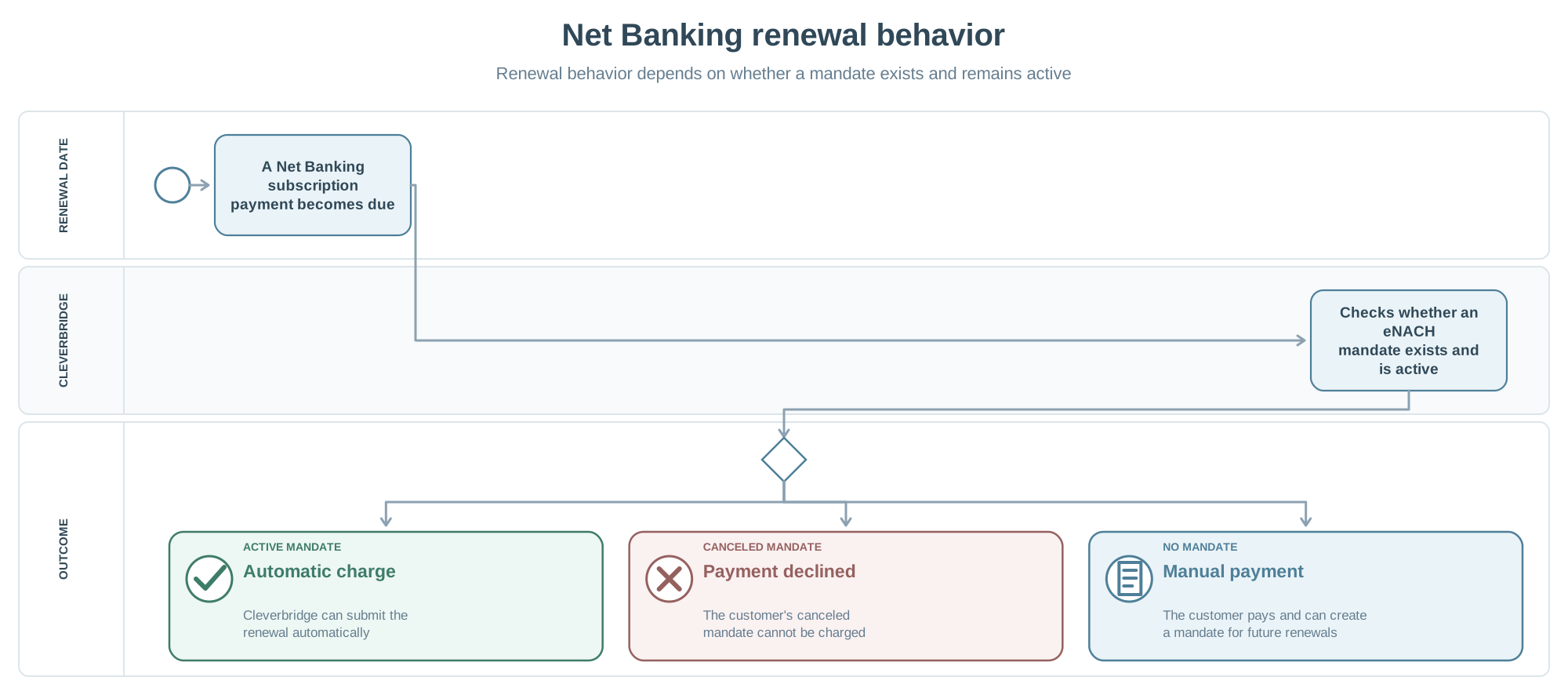
For renewals:
- If an active Net Banking mandate exists, Cleverbridge can charge the renewal automatically.
- If the customer canceled the mandate, the renewal payment is declined.
- If no mandate exists, the renewal behaves like an offline payment: the customer pays manually, and the resulting mandate can be used for future renewals.
NPCI describes the e-mandate flow as customer authorization through the destination bank, with NPCI providing the interface between the bank and the organization. See the NPCI NACH procedural guidelines.
Mandate amount adjustments
The mandate amount can include a configurable buffer and can be rounded up so that eligible future price changes remain within the mandate authorization. Buffering and rounding can be configured independently through Client Experience.
The configuration is applied in this order:
- Apply the configured percentage buffer.
- If rounding is enabled, round the buffered amount to the configured ceiling value.
Examples of the previously documented configuration logic include:
- INR 3,000 plus 20% becomes INR 3,600, then rounds to INR 10,000 when the ceiling unit is 10,000.
- INR 35,000 plus 20% becomes INR 42,000, then rounds to INR 50,000.
- INR 123,000 plus 20% becomes INR 147,600, then rounds to INR 150,000.
Paid order notifications
The PaidOrderNotification format does not change based on whether the customer paid with Net Banking or another payment method. Use the standard notification fields and your configured notification processing.
Refunds
- One-time Net Banking refunds use the standard Cleverbridge refund flow and return to the original payment method after provider confirmation.
- eNACH subscription refunds require manual handling because the provider does not support the standard automated refund flow for these transactions.